Research Should Not Just Validate Strategy. It Should Shape the Strategic Imagination
Some products arrive in the world with the confidence of an answer. They are launched with polished films, careful presentations and language about the future, as if the company behind them has seen something the rest of us have not yet understood. Sometimes that confidence is justified. A product appears and people quickly recognise a place for it in their lives. It solves a problem they already had, gives shape to a desire they were already developing, or makes an ordinary frustration suddenly feel unnecessary. At other times, something different happens. The product is noticed, discussed and admired, but it does not quite become part of everyday life. People understand that it is innovative, but they do not necessarily understand why it should matter to them.
This difference is important because strategy is often judged through the language of markets, growth, competition and technology, but it also depends on something more fragile: the quality of the organisation’s imagination. Every strategy contains an imagined world. It imagines who people are, what they need, what they will pay for, what they will tolerate, what they will find exciting, and what kind of future they are willing to enter. A strategy can be commercially ambitious and technologically impressive, but if the world it imagines is too thin or too distant from the lives people actually live, it can still struggle.
This is where research matters. Not only as a way of testing whether people like an idea once it already exists, but as a way of improving the idea before it becomes too fixed. In many organisations, research is still invited into the process after the most important imaginative work has already happened. A proposition has been defined, a roadmap has been discussed, a product vision has been written, and a leadership team has become attached to a direction. At that point, research is asked to validate, optimise or reduce risk. Those things are useful, but they are not enough. If research arrives only after the future has already been imagined, it may be too late to ask whether that future makes sense.
The best research does something more interesting. It makes strategy more answerable to life. It asks what people are already doing, what they are learning to tolerate, what they desire but cannot easily articulate, what embarrasses them, what they show off, what they hide, what they trust, and what they reject. It studies not only the user as a buyer or a segment, but the person as someone embedded in routines, memories, families, streets, workplaces, cultures and emotional histories.
For this reason, research should not only be understood as a tool for validation. It should be understood as a way of shaping strategic imagination. A company is not simply deciding what to build. It is deciding what kind of human situation it believes exists, or could exist. Some of those assumptions are grounded in real cultural movement. Others are projections of what executives, designers, engineers or investors find exciting.
The point is not to make strategy timid. Good research does not exist to make organisations less ambitious. It exists to make ambition more intelligent. It can help distinguish between a product that attracts attention and a product that becomes meaningful; between a future that is exciting to imagine and a future that people can actually inhabit. That distinction has always mattered. In the age of AI, when ideas, prototypes and products can be generated faster than ever, it matters even more.
When products mistake attention for meaning
The history of innovation is full of products that seemed to contain the future, at least for a while. They looked new. They generated headlines. They provoked strong reactions. Some were admired for their boldness, even when people were not sure they wanted them. This is one reason why failure is often more interesting than success. Failure reveals the assumptions that were hidden inside the strategy.
The Tesla Cybertruck is a good example of this tension. It is not a quiet product. It does not enter the street politely. Its sharp metallic body, science-fiction appearance and almost aggressive difference make it instantly recognisable. In that sense, it succeeded as spectacle. It made the ordinary pickup truck suddenly feel like a stage for technological “wow!”, internet culture and the personal mythology of Tesla itself. For many fans, that was part of the appeal. The Cybertruck was never just a truck. It was a statement.

The strategic problem is that a truck is not only a statement. It is also a tool, a family vehicle, a work vehicle, a rural or suburban object, a sign of reliability, and in many places a deeply cultural product. People do not only ask whether a truck looks different. They ask whether they can trust it, repair it, park it, insure it, use it for work, explain it to others, and feel comfortable being seen in it. The Cybertruck may have been designed brilliantly for being noticed, but adoption requires more than recognition. It requires a product to become meaningful enough, useful enough or emotionally coherent enough to enter everyday life.
There is a difference between being noticeable and being meaningful. The DeLorean DMC-12 (released in 1981) shows this in another way. Today, the DeLorean is one of the most recognisable cars ever made, largely because of its role as the time machine in Back to the Future. Its gull-wing doors and stainless-steel body seem almost designed for cultural memory. Yet its fame came after its commercial life had already collapsed. As a car, it struggled with price, performance, production problems and a market that did not fully embrace it. As an image, however, it became unforgettable.
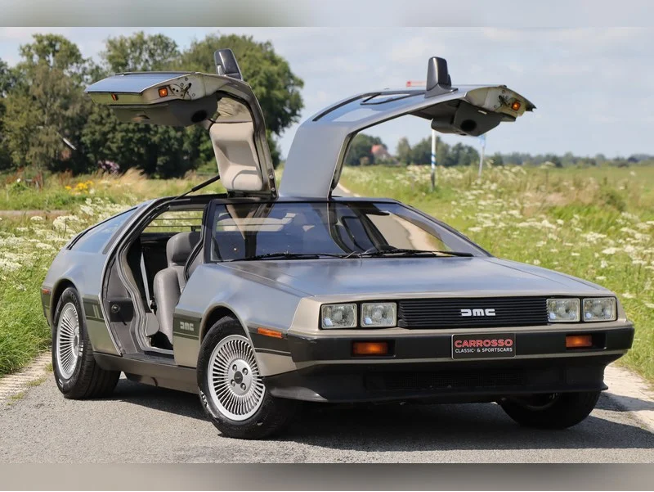
That distinction matters. A product can win the imagination of culture without winning the routines of everyday life. The DeLorean became iconic, but not in the way its makers intended. It is loved now partly because cinema gave it a second life, turning a failed product into a symbol of futurism, nostalgia and fantasy. Strategy cannot rely on that kind of rescue. Most products do not get a Hollywood afterlife.
The same problem appears in a different form with immersive technologies. Apple Vision Pro, Meta’s metaverse ambitions and Google Glass are not the same product, and they should not be treated as identical failures. Each had different strengths, contexts and intentions. But they all raise a similar strategic question: where does this future actually belong in ordinary life?



With Google Glass, the issue was not only whether wearable computing was useful to the person wearing it. It was also what the device did to everyone around them. A camera on someone’s face is not just a personal interface. It changes the social situation. It asks others to accept a new form of being seen, recorded or watched. This is why the product became awkward so quickly. It was not only a technical object. It was a social object, and the social object was much more uncomfortable than the technical vision allowed.
Apple Vision Pro presents a more refined version of the same problem. It is widely admired as an impressive piece of technology, but admiration is not the same as necessity. The question is not only whether spatial computing can be made beautiful, responsive and technically sophisticated. The question is whether enough people can find a place for it in the rhythms of home, work, entertainment, family life, budget and bodily comfort. A headset asks something intimate from the user. It asks to be worn on the face. It changes the relation between the person and the room, between the person and others, between attention and presence. That is not a minor detail. It is the product.
What these examples reveal is that failed innovation is rarely only a failure of execution. Sometimes the object works, but the imagined life around it does not. Sometimes the design is memorable, but the product does not find a meaningful role. Sometimes the technology is advanced, but the cultural situation is not ready for it, or does not want it in the form offered. In those cases, the important question is not whether more research should have been done at the end. It is whether research was able to challenge the imagined future early enough.
When innovation understands the life around it
This is why the opposite examples are so important. Successful products do not simply appear because they are more rational, cheaper or technically superior. They often succeed because they understand something that is already moving in people’s lives. They recognise a desire, a frustration, a habit or an emotional need before it has been fully articulated.
The iPod is one of the best examples of these ideas. When Apple introduced it, it was not cheap. It was not the first digital music player. It did not invent the desire for portable music. What it did was give a better shape to a desire that was already becoming part of everyday life. Music was already escaping the shelf. People had CDs, downloaded mp3 files, messy folders, cheap mp3 players and the growing feeling that their music could travel with them. Apple did not invent that world. It made that world feel simple, beautiful and almost inevitable.

This is the difference between asking people to adopt a company’s fantasy and recognising a change that people are already trying to live through. The iPod worked because it understood that music was becoming more personal, more portable, more abundant and more emotionally attached to identity[1]. It was not only a storage device. It was a way of carrying a private emotional world in public. The famous promise of having a thousand songs in your pocket worked because it was practical and poetic at the same time.
Dyson offers another kind of example. The company’s best-known products did not begin by asking people to enter a completely new future. They began with ordinary frustrations that had become almost invisible because people had learned to tolerate them. Vacuum cleaners lost suction. Bags were annoying. Cleaning was an everyday activity filled with small irritations that many people accepted as normal. Dyson’s insight was not only technical. It was cultural and domestic. It treated a boring frustration as worthy of serious engineering and design.

This is one of the things good research can do. It can notice what people no longer complain about because they have absorbed the problem into daily life. Many of the most important opportunities are hidden in these normalised frustrations. People may not say they want a radical redesign of a vacuum cleaner. They may not even think of cleaning as an area of innovation. But if research pays attention to the gap between what people do, what annoys them, and what they have stopped expecting to change, strategy can begin from a much deeper place.
Cars show the same point in a more emotional register. The Mazda MX-5, or Miata in some markets, did not become beloved because it was the fastest, most powerful or most practical car. Its success came from a much more disciplined understanding of desire. It understood that some drivers did not want more car. They wanted more feeling from less car. Lightness, balance, affordability and the simple pleasure of driving mattered more than excess.
That is a strategic insight, not merely a design preference. The MX-5 protected the emotional job of the product. It did not try to become a luxury car, a muscle car or a practical family vehicle. It understood its own promise and stayed close to it. In a culture where cars are often sold through size, status, speed and technological abundance, the MX-5 offered something smaller and more intimate: joy.

The Volkswagen Beetle is more complicated because its origins are historically uncomfortable, but as a cultural object it also shows how a product can become meaningful through simplicity, recognisability and emotional accessibility. It was not a car of power or luxury. It became, in many places, a car people could imagine as friendly, ordinary, distinctive and personal. That mattered a lot. People do not only buy cars as transport. They buy objects that say something about how they wish to move through the world at a lower price than powerful, bigger or famous cars.
What connects the iPod, Dyson and the MX-5 is not that they all followed the same method. They really did not. What connects them is that each understood something beyond features. The iPod understood the emotional and practical transition into digital music. Dyson understood a normalised frustration in domestic life. The MX-5 understood that driving pleasure could be light, affordable and almost humble. In each case, strategy was not only about what could be built. It was about what kind of desire, irritation or cultural moment the product could give form to.
Products as rituals
There is another kind of example that is less about invention and more about cultural continuity: the Panini World Cup album. It is easy to treat the album as a simple product made of paper, stickers and football licensing. But that misses why it matters. For many people, the Panini album is not only something to buy. It is something to do.
It belongs to the anticipation before the football tournament, to childhood memory, to national teams, to the pleasure of opening a pack, to the frustration of duplicates, to the search for the missing player, to the small negotiations of exchanging them with others. It turns football into a collecting ritual before the first match has even begun. In schools, families, offices, parks and fan communities, the album becomes a social object. Its value is not contained only in the sticker. It is produced through the practices around it.
This is why the cost of completing the album matters strategically. If the experience becomes too expensive, or if the process becomes too individualised, the company risks weakening the ritual that gives the product its meaning. The randomness of the sticker pack is part of the fun, but it can also become a source of frustration. Duplicates can be annoying if someone is buying alone. They become valuable when people swap. In that sense, exchange is not a side effect of the product. It is central to the culture of the product.
A weaker strategy would ask how many packs can be sold. A stronger strategy would ask what makes the album loved in the first place. Is it completion, or is it the social life of trying to complete it? Is it scarcity, or is it the exchange that scarcity creates? Is it nostalgia, or is it the way the album lets different generations share a football moment together? These are different questions, and they lead to different strategic choices.
The Panini example is useful because it shows that research-based strategy is not only about avoiding failed futures. It is also about protecting existing forms of meaning. Sometimes strategy fails by misunderstanding what is new. Sometimes it fails by over-monetising what is old and loved.
What research should know before strategy hardens
The examples above are different, but they point to the same idea: research-based strategy should investigate the world imagined by a product before that imagination becomes too expensive to change. This does not mean that every company needs endless research before acting. Strategy also requires conviction, timing and risk. But conviction is stronger when it has been forced to encounter reality.
The first thing research should understand is behaviour. What are people already doing, changing, hacking, avoiding or tolerating? The iPod made sense because digital music was already changing people’s relationship with listening. Dyson made sense because domestic frustration was already there, even if it had become normalised. Panini works because people already know how to turn duplicates into a social exchange. Good research does not only ask what people say they want. It studies what they are already trying to do.
The second thing is meaning. What does the product symbolise? The Cybertruck is not only an electric vehicle. It is a statement about futurism, toughness, disruption and identity. The DeLorean was not only a sports car. It became an image of the future, even if that image was more successful in cinema than in the market. The MX-5 is not only a small roadster. It symbolises a particular kind of driving pleasure. If strategy does not understand meaning, it may confuse attention with attachment.
The third thing is context. Where does the product enter everyday life? A headset is not just used in the abstract. It enters a living room, an office, a family, a body, a budget and a set of social expectations. Google Glass entered public space, where privacy and trust mattered as much as utility. Panini enters schools, homes, workplaces and football communities. No product is used nowhere. It always arrives somewhere.
The fourth thing is friction. Some friction is practical, such as price, comfort, maintenance, repair or complexity. Some is emotional, such as embarrassment, uncertainty or distrust. Some is social, such as whether other people accept the behaviour the product requires. Some is ethical, especially when products record, automate, predict or influence human behaviour. A strategy that ignores friction may mistake initial curiosity for future adoption.
The fifth thing is consequence. What might this create, damage, exclude or intensify? This question is especially important because organisations often focus on the intended use of a product, while people experience its wider effects. A product may make one group feel empowered and another feel watched. It may make a process faster while making it colder. It may create convenience while removing forms of human judgement people still need. It may generate revenue while damaging the ritual that gave it cultural value.
This is where research becomes more than validation. When it is done well, it becomes a discipline for improving decisions. It helps organisations see the assumptions behind their own confidence. It asks whether the imagined user is rich enough, whether the imagined context is real enough, whether the imagined future is socially workable enough. It does not remove uncertainty, but it makes uncertainty more intelligent.
When weak assumptions move faster: the use of AI
Assumptions have always mattered, but AI makes it much harder to ignore. Companies can now generate ideas, concepts, images, interfaces, research summaries, product copy, prototypes and strategic narratives at a speed that would have seemed extraordinary only a few years ago. This can be really useful. AI can help teams explore possibilities, process large amounts of material, produce variations, identify patterns and move from thought to prototype much more quickly.
The problem is not speed itself. Speed can be valuable. The problem is speed without judgement. If an organisation has a weak understanding of the human situation it is designing for, AI can make that weakness more productive, more polished and more scalable. A bad assumption can now travel faster, look more convincing, and be turned into more outputs before anyone has properly asked whether it makes sense.
This is why the connection between research and strategy becomes more important in the age of AI, not less. It may be tempting for organisations to think that, because AI can summarise data, generate personas, produce ideas or simulate user responses, the human work of research becomes less necessary. But this misunderstands what good research is. Research is not simply the movement of information from users to organisations. It is the interpretation of human meaning.
Product problems are often emotional, social and cultural before they are technical. People do not only use products. They trust them, reject them, show them off, hide them, misunderstand them, feel embarrassed by them, build routines around them, make memories with them, or use them to become recognisable to themselves and others. A product may be efficient and still feel cold. It may be useful and still feel intrusive. It may be clever and still feel unnecessary. It may be personalised and still feel disturbing. These are not minor reactions. They are often the difference between adoption and rejection.
AI can recognise patterns, but human researchers are still needed to understand why those patterns matter. This is especially true when the important evidence is not only what someone says, but how they say it, what they avoid, what they laugh about, what they hesitate to admit, what they describe as normal even when it clearly frustrates them, or what they cannot articulate because the feeling is still developing. The best researchers are trained to sit with ambiguity. They understand that people are not always consistent, that behaviour and explanation do not always match, and that the emotional meaning of a product often appears indirectly.
Here is an interesting example: AI-generated music offers a useful analogy. It can imitate genres, moods, melodies, structures and production styles. Sometimes it can sound impressive. It can resemble music very convincingly. But many listeners still feel the difference between something that has the shape of emotion and something that seems to carry human experience. Great songs do not move people only because they arrange sounds correctly. They often move people because they seem to come from a life, a body, a memory, a heartbreak, a longing, a social moment or a voice that has something at stake.
Research has a similar problem. AI-generated insight can sound fluent, polished and plausible. It can produce themes, opportunity areas, personas and recommendations. But the strategic question is whether it understands what is emotionally, socially and culturally at stake. Does it understand why a person might reject a product that appears useful? Does it understand why a service that works technically might feel humiliating? Does it understand why a piece of technology might be admired by early adopters but rejected by families, workers, communities or institutions? Does it understand the difference between something that sounds like insight and something that actually changes the quality of a decision?
This does not mean that AI has no place in research or strategy. It clearly does, but as a tool. Used carefully, it can help researchers and strategists work with larger bodies of material, compare signals, generate hypotheses, speed up synthesis and communicate findings in more flexible ways. It can make some parts of research practice more efficient. But it should not be confused with the whole practice. It can assist interpretation, but it does not replace the educated human judgement required to understand context, emotion, power, culture and consequence.
The larger risk is that organisations become so focused on using AI that they forget to ask where AI is actually needed. The question should not be, “How can we put AI into this product?” The better question is, “What human problem are we trying to solve, and would AI genuinely help?” There will be cases where the answer is yes. There will also be cases where AI adds complexity, mistrust, opacity or unnecessary distance between people and the service they need.
For that reason, research leadership in AI-era organisations needs to move further upstream. Researchers and strategists should be involved in deciding where AI belongs, what evidence is needed before scaling it, what forms of human judgement should remain, what users will trust or mistrust, and what consequences automation might create inside the organisation itself. AI does not only change products. It changes product-making culture. It changes what teams can make quickly, what they are tempted to skip, what they treat as evidence, and how easily polished outputs can be mistaken for understanding.
This is why human research-based strategy is so important now. It is not a nostalgic defence of old methods against new tools. It is a way of making technological speed more responsible, more useful and more connected to life. AI can generate possibilities. Research helps decide which possibilities are meaningful, ethical and worth pursuing.
Research as a discipline of imagination
The best research does not simply ask whether people like an idea. It asks whether the world imagined by the idea makes sense. That question is relevant to cars, music players, domestic appliances, football rituals, headsets, AI products and many other things organisations create. It is relevant whenever a company believes that people will change how they live, work, move, listen, clean, drive, play, collect, trust or socialise because of something it has made.
Some products fail because they are too far from the lives they hope to enter. Some succeed because they give form to a desire, frustration or ritual that was already there. Some become culturally famous without becoming strategically successful. Some are loved because they understand that people do not only want more features, more power or more speed. They want meaning, pleasure, trust, simplicity, recognition or a way to make life feel slightly more their own.
Research should therefore not be seen as a final checkpoint before launch. It should be part of how organisations imagine. It should question the thin user, the abstract market, the fashionable technology, the good future and the polished assumption. It should help strategy become more grounded without becoming less ambitious.
In the age of AI, this becomes even more important. Organisations can now produce faster than they can understand, and that creates a new kind of strategic risk. The future may be generated quickly, but it will still have to be lived slowly, by people in their homes, streets, workplaces, families, communities and emotional lives.
Research should not just validate strategy. It should shape the strategic imagination, because organisations do not only build products, services or technologies. They build assumptions about how people should live. Human research, done well, keeps those assumptions answerable to life.
Selected sources and references
If you would like to read more about the topics presented in this article, I recommend these books and academic papers.
1. Sheila Jasanoff and Sang-Hyun Kim, “Sociotechnical Imaginaries and National Energy Policies”, 2013
2. Jack Stilgoe, Richard Owen and Phil Macnaghten, “Developing a Framework for Responsible Innovation”, 2013
3. Roberto Verganti, Design-Driven Innovation, 2009
4. Donald Norman, Emotional Design, 2004
5. James C. Scott, Seeing Like a State, 1998
6. Jane Jacobs, The Death and Life of Great American Cities, 1961
7. Clayton Christensen, Taddy Hall, Karen Dillon and David Duncan, Competing Against Luck, 2016
8. Chris Ivory, “The role of the imagined user in planning and design narratives”, 2013
9. de Goey, Hilletofth and Eriksson, “Design-driven innovation: Making meaning for whom?”, 2017
10. Lucy Suchman, Plans and Situated Actions, revised edition 2007
[1] iPods were released in 2001. At this point in music history Walkman cassettes (released to the market in 1979) had, for 21 years, already set up the culture of listening personal music, mostly in privacy.